
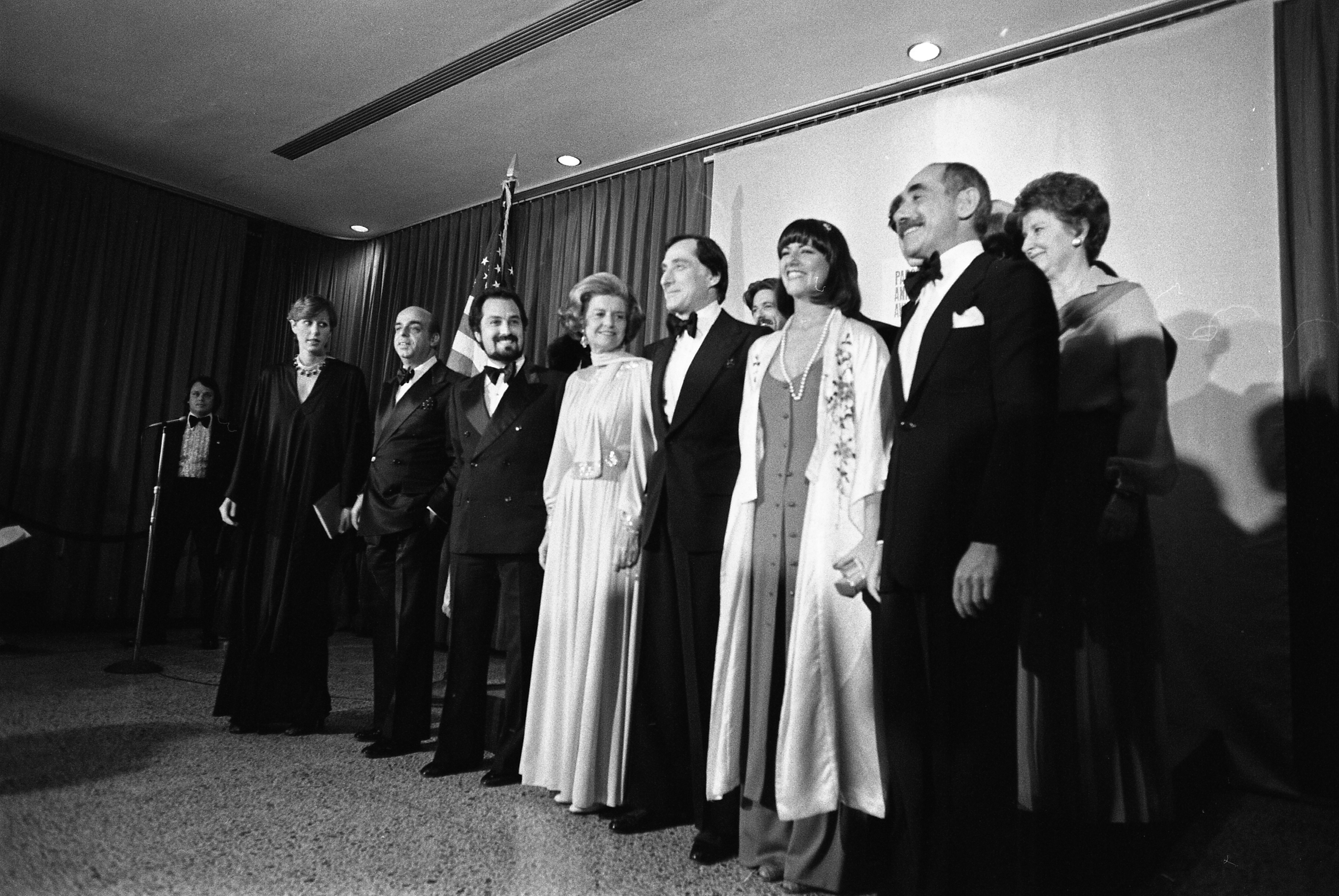
Photograph of First Lady Betty Ford with Designers at the Parsons School of Design Fashion Critics Award Show
View in the National Archives CatalogPhotograph of First Lady Betty Ford with Designers at the Parsons School of Design Fashion Critics Award Show
View in the National Archives CatalogPraised for “dressing well yet never overdressing,” (From International Best Dressed List press release, February 1975) Betty Ford was celebrated for supporting American fashion designers and manufacturers. She also became a fashion icon in her own right during her time as First Lady and received several formal honors related to fashion.
In 1975, she was added to the International Best Dressed Hall of Fame List, and in March of 1976, she received a Parsons Annual Fashion Critics Award from the Parsons School of Design in recognition of her sense of style. Later that year, in June 1976, a gown she wore to a state dinner for the Shah of Iran was added to the Smithsonian Institution’s “First Ladies’ Hall” exhibit. The dress, designed by Frankie Welch, was pale green satin chiffon with embroidered chrysanthemums and sequins. In September 1976, Betty was also honored with the creation of the Betty Ford Fashion Scholarship by the American Fashion Group, a professional organization for the fashion industry (now known as Fashion Group International).
Betty worked with American designers to craft her signature style as First Lady. Designer Frankie Welch said of her style: “She is adventuresome in fashion as long as it’s becoming to her. Her style is tailored – I call it casual elegance” (From People, September 16, 1974). Welch designed several pieces for Mrs. Ford, including a bold printed scarf featuring a facsimile of Betty’s signature that the First Lady used as official gifts for White House visitors. Other designers Betty wore often included Luis Estevez and Alberto Capraro. Estevez, famous for his flattering, feminine clothing, created several iconic designs for the First Lady, including the green chiffon dress with lace collar she wore for the state dinner with Queen Elizabeth and the eagle print dress she wore for several Bicentennial events in 1976. Capraro was known for his moderate prices and use of American fabrics, and after her first meeting with him, Betty ordered 12 day dresses. Betty is wearing a beige and white flower print safari jacket and skirt ensemble designed by Capraro for the June 2, 1976, arrival ceremony for King Juan Carlos and Queen Sofia of Spain.
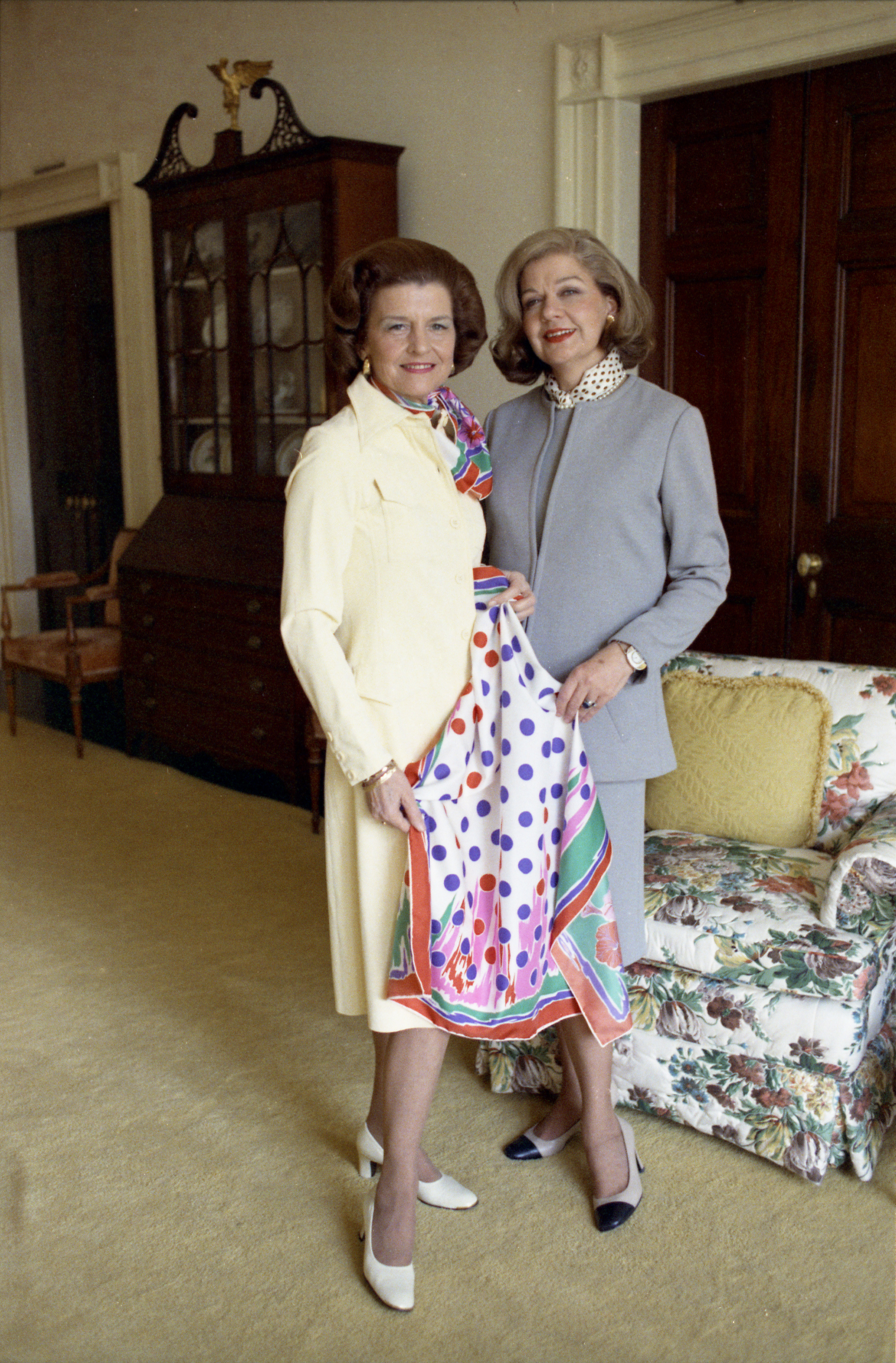
First Lady Betty Ford and Fashion Designer Frankie Welch Holding a Scarf in the West Sitting Room of the White House
View in the National Archives CatalogFirst Lady Betty Ford and Fashion Designer Frankie Welch Holding a Scarf in the West Sitting Room of the White House
View in the National Archives Catalog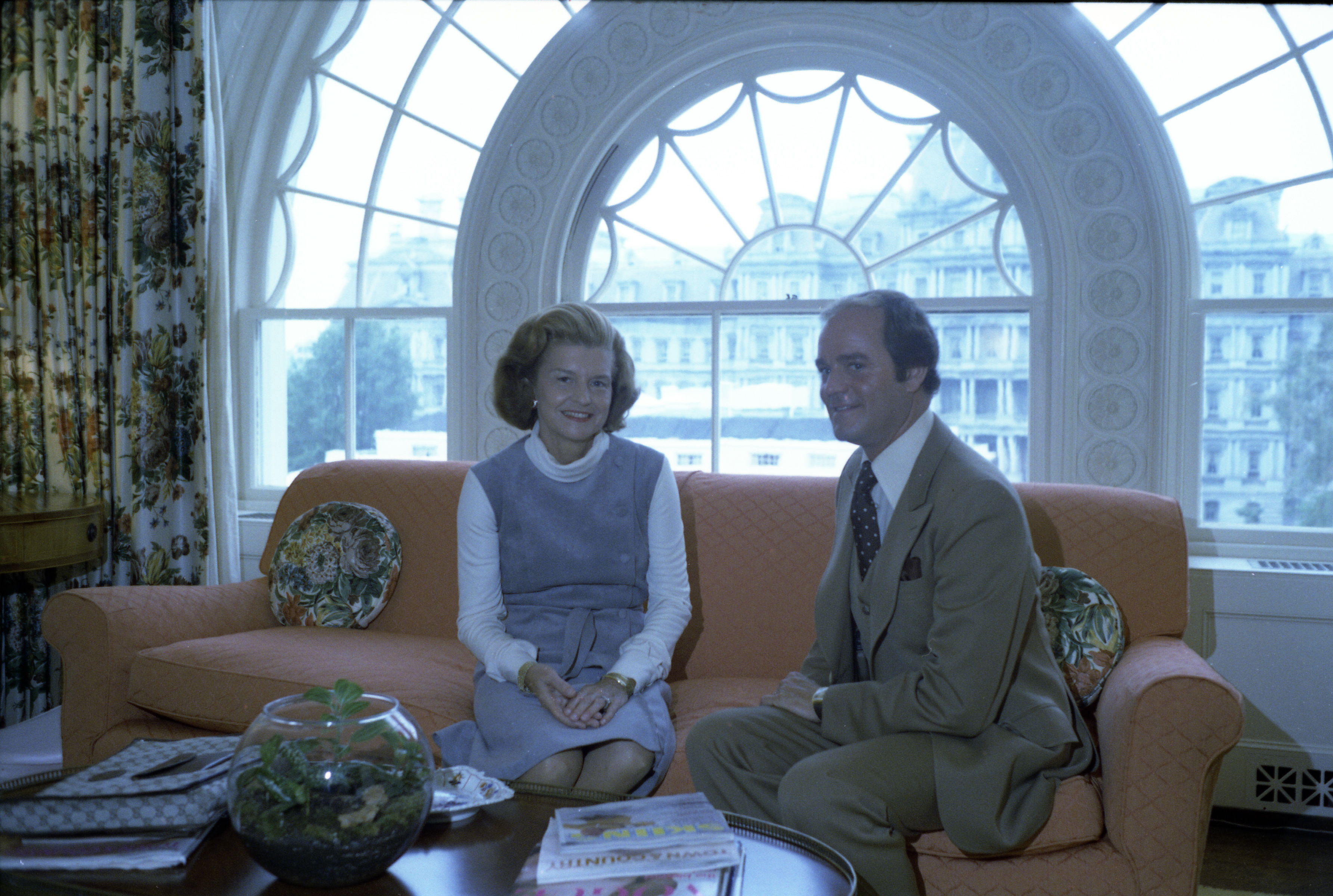
First Lady Betty Ford Meeting with Fashion Designer Luis Estevez in the West Sitting Hall of the White House
View in the National Archives CatalogFirst Lady Betty Ford Meeting with Fashion Designer Luis Estevez in the West Sitting Hall of the White House
View in the National Archives CatalogAlthough Mrs. Ford was celebrated for her stylish wardrobe and worked one-on-one with fashion designers, her clothes were deliberately chosen to be affordable for the average middle-class woman. Due to the economic crisis of the 1970s, Betty wanted to avoid expensive haute couture pieces and instead focus on practical, moderately priced but still stylish clothes. If she found a dress she liked, she would sometimes order it in multiple colors and often wore dresses on more than one occasion. Betty also preferred practical dresses that traveled well as she often had to change clothes on an airplane.
As First Lady, Betty Ford supported the American fashion and textiles industries by buying and wearing modern, economical American designs. The former model showed the world America’s style and talent through her stylish but practical wardrobe. The awards program for the 1976 Parsons Award describes how Betty embodied American fashion:
Not only in the way she thinks and acts, but in the way she looks as well, Mrs. Ford is as unabashedly American as the house she lives in. Possessing her own distinctive style, she has selected a wardrobe that is designed and manufactured exclusively by American talent. Thus, whether at 1600 Pennsylvania Avenue or on visits to foreign capitals, she imparts to all American women her deep conviction that the highest standards of taste and craftsmanship are to be found not thousands of miles, but a few blocks from home. The American fashion industry and the young student designer who may one day provide its creative impetus can find no greater encouragement and support.
From Parsons Award program, 3/29/1976
For additional images and information on Betty Ford’s fashion, see the “Inside Betty’s Closet” series from the Ford Library Tumblr and the “Betty Ford Gowns and Dresses” online exhibit from the Ford Museum.
Digitized Holdings Related to Betty Ford and Fashion
Honors and Awards
- Betty is added to “International Best Dressed” list, February 1975
- International Best Dressed List, Feb 28, 1975
- Betty is awarded 1976 Parsons Annual Fashion Critics Award by Parsons School of Design, March 1976
- Betty Ford’s gown is donated to the Smithsonian Institution and added to the First Ladies Hall exhibit, June 1976:
- 1976/06/24 - Gown Presentation, Smithsonian Institution
- 6/24/76 - Gown Presentation at the Smithsonian
- First Ladies Gown Collection (Smithsonian)
- 1976/06/24 - Gown Presentation, Smithsonian Institution
- 6/24/76 - Gown Presentation at the Smithsonian
- 6/24/76 ‑ Smithsonian Gown Presentation (1)
- 6/24/76 - Smithsonian Gown Presentation (2)
- Image: Betty Ford poses with Frankie Welch at the presentation of her gown to the Smithsonian, 06/24/1976
- Image: Duplicate of the gown donated to the Smithsonian Additional link
- American Fashion Group creates Betty Ford Fashion Scholarship, September 1976

Special Events
- Washington Heart Association “Affairs of the Heart” luncheon, February 1975 and 1976
- 2/14/75 ‑ Washington Heart Association
- Betty wears Ralph Lauren for 2/12/76 - Heart Association Luncheon
- 2/12/1976 - Washington Heart Association 1 and Washington Heart Association 2
- American Cancer Society - Air France Luncheon featuring Chanel Haute Couture fashion show, April 1975
- Frankie Welch Congressional Wives' Luncheon Style Show hosted by the League of Republican Women of D.C., January 1976
- (1/12/76)
Designers and Designs
- Albert Capraro
- Capraro, Albert (Designs)
- Ford, Betty - Fashion - Designers - Capraro, Albert 1
- Ford, Betty - Fashion - Designers - Capraro, Albert 2
- Image: Fashion Designer Albert Capraro Adjusting First Lady Betty Ford's Collar in the Second Floor West Sitting Room of the White House, February 21, 1975
- Image: First Lady Betty Ford Reviewing Clothing Designs with Fashion Designer Albert Capraro in the West Sitting Room of the White House, January 8, 1975
- Image: Albert Capraro Fitting a Gown for First Lady Betty Ford in the Presidential Suite of the Waldorf Astoria Hotel in New York City, June 20, 1975
- Luis Estevez
- Ford, Betty - Fashion - Designers - Estevez, Luis
- Image: Green chiffon dress designed by Luis Estevez (additional link), worn by Betty Ford during the state dinner for Queen Elizabeth II, July 7, 1976
- Image: First Lady Betty Ford Meeting with Fashion Designer Luis Estevez in the West Sitting Hall of the White House
- Clothes (includes correspondence and sales catalogs. Mastectomy clothing).
- Betty Ford and Susan shop for clothes/prom dress in New York.
- Frankie Welch designs for Betty Ford scarf, 1975 (used as official White House gift; subsequent replicas solid with facsimile of her signature):
- Betty and Susan Ford wear Christie Brothers’ fur coats, 1975:
- Statements/quotes on Betty’s preference for economical, stylish clothes:
- Interview with Betty Ford’s hair stylist, Jim Merson, April 20, 1975:
